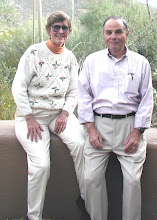
As we wound down our time in Spain in the Spring of 1976, one of our last official acts was to throw an anniversary party for ourselves. It was our twentieth anniversary. In the States we had entertained by inviting other people into our homes. In Guam extended families either attended fiestas or gave them. But in Spain the custom was to invite each other out to restaurants.
For example, we knew of a fish place in The Calvario, a village sparated from Torremolinos by a protrusion of land that swept into the Med. The little fish place had no menu because they didn’t know what was going to be caught that day. Each time we ate there, we’d have to go through a little ritual.
“Hay calamari?” (Squid)
“No, no hay calamari?”
“Hay boquerones?” (Deep fat fried fingerling fish, eaten bones and all. Full of transfats. Yum.)
And so we would proceed through the same litany every time we went there. But we could always depend on fresh fish, salad, bread and wine for about $2.00 a head.
Our multlilingual neighbor, Claude deBretteville, always solved most of our problems, whether it came to procuring entry stamps for passports, finding a hotel room during Romería, or, in this case, finding a suitable restaurant for our party. She found a very small restaurant on the outskirts of town that had been used as a stage coach house in the early 17th century and had stayed in constant operation since. Ventorilla La Perra.
The restaurant was small but had an ambiance a Stateside business would kill for. It was actually built 300 years ago, not two years ago and made to look old. White stucco exterior, tile floors, wrought iron. Our 22 guests dined outdoors that evening on paella, salad, and bread. The paella contained shellfish, lobster, fresh asparagus. Gourmet magazine could have featured this dish. We also had an open bar. Our guests could have as much beer, wine or soft drinks as they wanted. I suppose tea and coffee as well.
It was a wonderful party. To employ the old cliché, a good time was had by all. I especially had a good time when I got the check. It was about $80 U.S., generous tip included. And we didn’t even have to clean up. We just went home. Now that’s the way to celebrate an anniversary.
Showing posts with label Torremolinos. Show all posts
Showing posts with label Torremolinos. Show all posts
Wednesday, February 17, 2010


Wednesday, February 10, 2010
University Tee Shirts
In 1975-76 Spain was a cheap, cheap, cheap place to take a vacation. That made it attractive for college-age people to go walkabout in those days as part of their coming-of-age experience. Armed with backpacks and Eurail passes, you could find them in every town in Europe.
You could especially find them in Torremolinos, which had a cachet to it thanks to James Michener’s book The Drifters. First published in 1971, was a hugely influential book, translated into at least ten European languages. Five translations, Dutch, Finnish, German, Portuguese, and Spanish, featured the name “Torremolinos” in their titles. It would have been the answer to the Chamber of Commerce’s prayer, if only the Hippies brought more money with them.
Many of the young people traveling in Torremolinos on the cheap were university students during the fall, winter and spring months. They wore tee-shirts all over the street advertising this university or that. I suspect there were far more university tee-shirts than university students, but I’m of a suspicious nature. I think the expectation was that Ohio State people would see each other and hang out together. But why you would go all the way to Spain to hang out with someone from your own university? I never understood the thinking there.
Confounding the scheme, however, was the practice of exchanging tee-shirts. After a few brewskies there would be a round of tee-shirt exchanges and someone wearing an Oxford shirt might not even speak English. He might be a Heidelberg student and the person he exchanged with spoke no German.
We saw lots of Oxfords and Sorbonnes, lots of Georgetowns and Ohio States. Didn’t see too many Bob Jones Universities. The most popular tee-shirt of all was UCLA’s. You could probably get two Sorbonnes and a beer for a UCLA shirt in good repair. Free market economy, nothing like it.
You could especially find them in Torremolinos, which had a cachet to it thanks to James Michener’s book The Drifters. First published in 1971, was a hugely influential book, translated into at least ten European languages. Five translations, Dutch, Finnish, German, Portuguese, and Spanish, featured the name “Torremolinos” in their titles. It would have been the answer to the Chamber of Commerce’s prayer, if only the Hippies brought more money with them.
Many of the young people traveling in Torremolinos on the cheap were university students during the fall, winter and spring months. They wore tee-shirts all over the street advertising this university or that. I suspect there were far more university tee-shirts than university students, but I’m of a suspicious nature. I think the expectation was that Ohio State people would see each other and hang out together. But why you would go all the way to Spain to hang out with someone from your own university? I never understood the thinking there.
Confounding the scheme, however, was the practice of exchanging tee-shirts. After a few brewskies there would be a round of tee-shirt exchanges and someone wearing an Oxford shirt might not even speak English. He might be a Heidelberg student and the person he exchanged with spoke no German.
We saw lots of Oxfords and Sorbonnes, lots of Georgetowns and Ohio States. Didn’t see too many Bob Jones Universities. The most popular tee-shirt of all was UCLA’s. You could probably get two Sorbonnes and a beer for a UCLA shirt in good repair. Free market economy, nothing like it.
Wednesday, February 3, 2010
The Guys with the Funny Hats
The guardia civil are those Spanish cops who wear the silly little patent leather hats and carry the silly little Schmeisser machine pistols. One look at these guys and you know that there is not a gram of humor there.
They and their families live in their own community called a cuartel. Single men live in smaller, bachelor quarters. All the rooms face inward. Four massive walls and a few guarded gates present the outward face to the public. Why mince words? It’s a fort.
In those days members of the guardia never served in a part of Spain where they might have extended family. Police from Galicia service in Andalucia. Police from Andalucia served in Murcia. This reduced the strain of having a family member want a break when apprehended in a no-no.
Here’s a guardia story about a man who owned the bar where McConnell and I dazzled the Icelanders with our many repetitions of Battle Hymn of the Republic. He told me he was at home one afternoon when a loud knocking sounded at the door. Two guardia civiles stood there, silly hats, Schmeissers and all. They told him that the commandante requested the honor of his presence at headquarters at the cuartel immediately. He accompanied the policemen, of course, and upon arriving at police headquarters encountered--a plumber.
The bar owner had hired this particular plumber to do some work at the restaurant and paid him in advance in the form of two checks. The plumber did not complete the work. The owner asked his banker if he could cancel the checks. The banker said of course he could. But the banker say what would happen next. So much for don't-ask-don't-tell.
The commandante listened to both our hero's and the plumber’s stories. Then the commandante told the plumber that starting the next day he would work and complete his job in a satisfactory manner. The alternative was to be put out of business. This was not an idle threat.
Then to my friend he said, “You may not know this, being an American, but when you write a check in Spain, it is a contract. When you cancelled that check, you breached that contract. Now here’s what you are going to do, señor. You are going to write the plumber another check right now, and if it bounces, I will put you out of business.” That was not an idle threat, either.
The guardia civil never made idle threats. That’s why people didn’t mess with them.
They and their families live in their own community called a cuartel. Single men live in smaller, bachelor quarters. All the rooms face inward. Four massive walls and a few guarded gates present the outward face to the public. Why mince words? It’s a fort.
In those days members of the guardia never served in a part of Spain where they might have extended family. Police from Galicia service in Andalucia. Police from Andalucia served in Murcia. This reduced the strain of having a family member want a break when apprehended in a no-no.
Here’s a guardia story about a man who owned the bar where McConnell and I dazzled the Icelanders with our many repetitions of Battle Hymn of the Republic. He told me he was at home one afternoon when a loud knocking sounded at the door. Two guardia civiles stood there, silly hats, Schmeissers and all. They told him that the commandante requested the honor of his presence at headquarters at the cuartel immediately. He accompanied the policemen, of course, and upon arriving at police headquarters encountered--a plumber.
The bar owner had hired this particular plumber to do some work at the restaurant and paid him in advance in the form of two checks. The plumber did not complete the work. The owner asked his banker if he could cancel the checks. The banker said of course he could. But the banker say what would happen next. So much for don't-ask-don't-tell.
The commandante listened to both our hero's and the plumber’s stories. Then the commandante told the plumber that starting the next day he would work and complete his job in a satisfactory manner. The alternative was to be put out of business. This was not an idle threat.
Then to my friend he said, “You may not know this, being an American, but when you write a check in Spain, it is a contract. When you cancelled that check, you breached that contract. Now here’s what you are going to do, señor. You are going to write the plumber another check right now, and if it bounces, I will put you out of business.” That was not an idle threat, either.
The guardia civil never made idle threats. That’s why people didn’t mess with them.
Thursday, June 18, 2009
Eric and Chile
We have always risen reasonably early by most peoples’ standards. Sometimes on Sunday mornings we might sleep in, but usually we rise and shine by seven. And we almost always managed to get up before our son, Eric.
With some surprise, then, I woke up around 5:30 one Sunday morning to find Eric dressed and leaving the house. He said he was going to church. And that was probably true, I thought, because there’s not much a teenage boy can do at 5:30 Sunday morning besides go to church. At the same time, since we never participated ourselves, I couldn’t help but wonder what motivated the boy.
Later investigation revealed it all had to do with Chile, a bartender at Tres Barriles (Three Barrels). There was absolutely nothing for young foreigners to do in Spain except study or hang out with each other. No youth clubs, no soccer leagues, nada. And, being foreigners, they couldn’t get jobs.
Eric and several friends got to know Chile as he was setting out tables for the evening trade. They called him “Chile” because that’s where he came from, Chile.
Chile let the boys help him set out tables and bought them a soft drink in exchange. But he had a proviso. They couldn’t help unless they went to church with him. “He even gave me a hundred pesetas for the collection box, Dad,” Eric said as he ran out the door.
“My God,” I thought as I rolled over and went back to sleep. “My son’s bartender is a better influence on him than I am.”
Eric’s newly discovered piety didn’t last very long, though. Six o’clock mass is early for anybody, let alone a teenager.
With some surprise, then, I woke up around 5:30 one Sunday morning to find Eric dressed and leaving the house. He said he was going to church. And that was probably true, I thought, because there’s not much a teenage boy can do at 5:30 Sunday morning besides go to church. At the same time, since we never participated ourselves, I couldn’t help but wonder what motivated the boy.
Later investigation revealed it all had to do with Chile, a bartender at Tres Barriles (Three Barrels). There was absolutely nothing for young foreigners to do in Spain except study or hang out with each other. No youth clubs, no soccer leagues, nada. And, being foreigners, they couldn’t get jobs.
Eric and several friends got to know Chile as he was setting out tables for the evening trade. They called him “Chile” because that’s where he came from, Chile.
Chile let the boys help him set out tables and bought them a soft drink in exchange. But he had a proviso. They couldn’t help unless they went to church with him. “He even gave me a hundred pesetas for the collection box, Dad,” Eric said as he ran out the door.
“My God,” I thought as I rolled over and went back to sleep. “My son’s bartender is a better influence on him than I am.”
Eric’s newly discovered piety didn’t last very long, though. Six o’clock mass is early for anybody, let alone a teenager.
Thursday, June 11, 2009
Dining Out in Torremolinos
As we walked into Torremolinos from our home on a more or less daily basis, we passed by a Danish restaurant. I noticed they offered a five-course meal free to anyone who could eat the whole thing. “The whole thing” was the key. If you passed out halfway through the meal, you still had to pay for the whole dinner, even though you had only eaten half. No doggie bags. Joanne and I let this temptation go for a year, but eventually succumbed.
We ordered the meal with some wine and prepared ourselves for the inevitable food fest. Salad first, right? Wrong. Salad did not appear on the menu. A little bread, but no salad.
The first course was a fish course. Pickled herring in sour cream, fish fillets served with rich sauces, bacalao, lobster, salmon, shrimp, eat, you fools, eat.
` The second course was a hot meat course. Hot roast beef, hot roast pork, ham, meat loaves, enjoy, enjoy.
The third course was a cold meat course, more beef, more ham, meat rolls stuffed with pimientos. Having a little difficulty? There are two more courses to come.
I wonder what Circle of Hell we’re in?
The fourth course was the cheese course. If there is one thing the Danes do well, it is cheese. And the French, the Spanish, the Italians, the British. And all the countries had representatives in the cheese course. It was a regular cheesy United Nations.
There was no way we could make any serious indentures into the cheese course. To this day, we have no idea what the fifth course might have been. Nuts? Peanuts, walnuts, Brazil nuts, cocoanuts? As it was, we walked home and didn’t have to eat again for a long time.
If the Danish dinner was an experiment in applied misery, my favorite fish restaurant was a joy forever. Torremolinos extends to the beach as does it’s neighboring area, the Calvario. The two places are separated by a finger of land jutting into the sea that happens to be devoid of vegetation. Hence the name “Calvario”, which means something like “finger of land devoid of vegetation” or “bald place.” The Calvario had no beach to speak of, but hundreds of little stores and restaurants stacked on top of each other.
I don’t even know if my favorite fish restaurant had a name. Certainly it did not blazon into the night with the aid of neon. Nor did I ever see a menu, for there were none. They didn’t know what was going to be caught that day, and therefore didn’t know what they would have to sell that night. You had to learn the names of the fish.
We could take our friends there and each order a fish dish in which we could all share. They served deep fat fried elver eels by the basket. Their little eyeballs looked like flakes of black pepper. Most of our guests ate them without asking. They may have suspected, but they didn’t ask. They served deep fat fried herrings that we ate bones and all. Don’t ask, don’t tell dining. Instead of onion rings we had squid tentacles fried a la Romana.
We also had individual salads, bread and wine. Usually people ate and enjoyed. They especially enjoyed when it was time to pay up because the cost was around $2.00 per head.
We ordered the meal with some wine and prepared ourselves for the inevitable food fest. Salad first, right? Wrong. Salad did not appear on the menu. A little bread, but no salad.
The first course was a fish course. Pickled herring in sour cream, fish fillets served with rich sauces, bacalao, lobster, salmon, shrimp, eat, you fools, eat.
` The second course was a hot meat course. Hot roast beef, hot roast pork, ham, meat loaves, enjoy, enjoy.
The third course was a cold meat course, more beef, more ham, meat rolls stuffed with pimientos. Having a little difficulty? There are two more courses to come.
I wonder what Circle of Hell we’re in?
The fourth course was the cheese course. If there is one thing the Danes do well, it is cheese. And the French, the Spanish, the Italians, the British. And all the countries had representatives in the cheese course. It was a regular cheesy United Nations.
There was no way we could make any serious indentures into the cheese course. To this day, we have no idea what the fifth course might have been. Nuts? Peanuts, walnuts, Brazil nuts, cocoanuts? As it was, we walked home and didn’t have to eat again for a long time.
If the Danish dinner was an experiment in applied misery, my favorite fish restaurant was a joy forever. Torremolinos extends to the beach as does it’s neighboring area, the Calvario. The two places are separated by a finger of land jutting into the sea that happens to be devoid of vegetation. Hence the name “Calvario”, which means something like “finger of land devoid of vegetation” or “bald place.” The Calvario had no beach to speak of, but hundreds of little stores and restaurants stacked on top of each other.
I don’t even know if my favorite fish restaurant had a name. Certainly it did not blazon into the night with the aid of neon. Nor did I ever see a menu, for there were none. They didn’t know what was going to be caught that day, and therefore didn’t know what they would have to sell that night. You had to learn the names of the fish.
We could take our friends there and each order a fish dish in which we could all share. They served deep fat fried elver eels by the basket. Their little eyeballs looked like flakes of black pepper. Most of our guests ate them without asking. They may have suspected, but they didn’t ask. They served deep fat fried herrings that we ate bones and all. Don’t ask, don’t tell dining. Instead of onion rings we had squid tentacles fried a la Romana.
We also had individual salads, bread and wine. Usually people ate and enjoyed. They especially enjoyed when it was time to pay up because the cost was around $2.00 per head.
Wednesday, May 27, 2009
An Unnamed Cave
Several caves in the Málaga vicinity (if you define “vicinity” broadly) are noted tourist attractions, or should be, with natural wonders or prehistoric paintings. But other caves have no claim to fame. They have no prehistoric paintings. They are not remarked in tourist guides. Fodors has nothing to say about them. They are tubes in the ground, unlit, unmarked, and fit only for teenagers to explore. Those are the good ones.
Our son, Eric, and his friend, Victor deGroot, decided to camp overnight in one such hole in the ground near Torremolinos. The boys hitchhiked to their chosen cave with cans of food and bedrolls, prepared for a great adventure. It was cloudy and threatening rain. All the better. More adventure.
Night fell darkly. Rain fell heavily. The cave leaked wetly. The boys decided that their adventure was uncomfortable and they would be better off home. But it was harder to hitchhike on a dark, rainy night and the boys met with no success. Finally some policemen pulled up in a car and made the boys stand in the rain while they played Twenty Questions. At last the police told the boys to go home. The boys asked for a ride but met with a resounding, “Nope.”
Teenage years are hard. And sometimes wet.
Our son, Eric, and his friend, Victor deGroot, decided to camp overnight in one such hole in the ground near Torremolinos. The boys hitchhiked to their chosen cave with cans of food and bedrolls, prepared for a great adventure. It was cloudy and threatening rain. All the better. More adventure.
Night fell darkly. Rain fell heavily. The cave leaked wetly. The boys decided that their adventure was uncomfortable and they would be better off home. But it was harder to hitchhike on a dark, rainy night and the boys met with no success. Finally some policemen pulled up in a car and made the boys stand in the rain while they played Twenty Questions. At last the police told the boys to go home. The boys asked for a ride but met with a resounding, “Nope.”
Teenage years are hard. And sometimes wet.
Thursday, May 7, 2009
Calle San Miguel
Like many cities and towns in Europe, Torremolinos had a walking street, Calle San Miguel. No cars or any other wheeled vehicles allowed, no cell phoning drivers, no bicyclists wired into I-pods, no skateboarders or in-line skaters. You can walk in any direction you want any time you want providing no one is blocking your way. Just pedestrians. Sweet. As a maraschino cherry topping, Calle San Miguel was paved with yellow bricks.
The people on Calle San Miguel were cosmopolitan and raffish all at once. Torremolinos was no longer the Hippie Haven it was when James Michener wrote The Drifters, but many young people sported longer hair than Spanish custom dictated, and some played guitars as though they held a species of bass drum. Many of them, it seemed to me, were either passing through or not, but either way waiting for something to happen. Anything. Many wore tee-shirts with the names of American universities. UCLA’s shirt was the most popular in Europe. However, the shirt didn’t mean they attended that school. Some young people didn’t even speak English and somewhere else was a young Southern Californian wearing a Heidelberg tee-shirt who spoke no German.
People kept Spanish hours, surprise, surprise. During siesta time you could have gone bowling except Calle San Miguel had a very definite tilt downhill toward the Mediterranean. The street ended in a steep stairwell to the beach named Calle del Peligro, Street of danger. The danger was if you fell on the stairwell, you’d go a long way.
No one ever lost a bowling ball, but once a soccer ball got loose. Before it was recovered by the boy who owned it every foot on the street had touched it at least once including a nun in her habit. Caught the ball beautifully in the sweet spot on her foot. Nice shot, sister. Europeans play that game well.
In the evening the tourists came out to play. That’s when Calle San Miguel revealed itself in its true colors, a glorious tourist trap. You could buy post cards, sleazy little ash trays with “recuerdo de Torremolinos,” written on it, oil paintings of Spanish villages mass produced in Morocco. Every third door opened onto a bar. We stopped in one once to listen to some music and absent mindedly ordered a sangria. The bartender slopped in heavy dollops of vodka and gin before he even reached for fruit and wine. We stopped him in his tracks. We wanted a drink and he was mixing a prescription.
Life went on like a Old West gold mining boom town until 3:00 or so. Then the store owners aimed their guests out the door, cleaned up after them, weighed their day’s money, and got ready for the next day’s business. We didn't have to watch television. There was more entertainment on Calle San Miguel.
Copyright Ken Harris 2009
The people on Calle San Miguel were cosmopolitan and raffish all at once. Torremolinos was no longer the Hippie Haven it was when James Michener wrote The Drifters, but many young people sported longer hair than Spanish custom dictated, and some played guitars as though they held a species of bass drum. Many of them, it seemed to me, were either passing through or not, but either way waiting for something to happen. Anything. Many wore tee-shirts with the names of American universities. UCLA’s shirt was the most popular in Europe. However, the shirt didn’t mean they attended that school. Some young people didn’t even speak English and somewhere else was a young Southern Californian wearing a Heidelberg tee-shirt who spoke no German.
People kept Spanish hours, surprise, surprise. During siesta time you could have gone bowling except Calle San Miguel had a very definite tilt downhill toward the Mediterranean. The street ended in a steep stairwell to the beach named Calle del Peligro, Street of danger. The danger was if you fell on the stairwell, you’d go a long way.
No one ever lost a bowling ball, but once a soccer ball got loose. Before it was recovered by the boy who owned it every foot on the street had touched it at least once including a nun in her habit. Caught the ball beautifully in the sweet spot on her foot. Nice shot, sister. Europeans play that game well.
In the evening the tourists came out to play. That’s when Calle San Miguel revealed itself in its true colors, a glorious tourist trap. You could buy post cards, sleazy little ash trays with “recuerdo de Torremolinos,” written on it, oil paintings of Spanish villages mass produced in Morocco. Every third door opened onto a bar. We stopped in one once to listen to some music and absent mindedly ordered a sangria. The bartender slopped in heavy dollops of vodka and gin before he even reached for fruit and wine. We stopped him in his tracks. We wanted a drink and he was mixing a prescription.
Life went on like a Old West gold mining boom town until 3:00 or so. Then the store owners aimed their guests out the door, cleaned up after them, weighed their day’s money, and got ready for the next day’s business. We didn't have to watch television. There was more entertainment on Calle San Miguel.
Copyright Ken Harris 2009
Thursday, April 16, 2009
A Boy (Spanish) and a Girl (Canadian)
We met our boss, David McConnell, in downtown Torremolinos for wine one night. When we arrived we found him ensconced at a table with a nubile Canadian girl celebrating her 18th birthday. Our friend Ina Robinson once said that all women either had bosoms or bazooms. This bazoomy girl from Canada wasn’t sure what was going to happen on her 18th birthday, but she was sure it was going to be wonderful.
Our own children were not much younger than this girl and Joanne was heard to call McConnell “cradle robber” under her breath. He retorted, “Easy, ‘Mom.’” And to be perfectly honest, we didn’t know what plans McConnell may have had for the evening, but they were complicated by the presence of a third party, a young Spanish male dressed most stylishly. He wore his shirt open to the navel. A gold colored medallion dangled from his neck by a gold colored chain. We knew he was no spy because there was no room in his pants for even a microdot let alone a secret message or stolen state paper.
Joanne took exception to the boy’s style, or lack thereof. If you’re going to be a sophisticated seducer, you should have more than two squiggly little chest hairs. She decided that if he was going to run with the big dogs then he should learn to drink like them as well.
She bought him a wine. And another. And another. We spelled each other so we didn’t have to match him drink for drink. He soon began to make trips to the men’s room, from which he returned with water dripping from his face, hoping a cold splash would reduce dizziness. It doesn’t. I speak from experience here. He frantically suggested we adjourn to a discoteca magnifica where we could dance. We wouldn’t hear of it. By Jove, this wine is splendid. Let’s have some more, shall we?
The young Spaniard was game but eventually lurched home. He probably had a head as big as a soccer field the next morning, but maybe he learned something. I hope he learned that if intended to run with the big dogs he should button up his shirt. Or at least paste on some phony chest hairs.
We went home shortly after the Spaniard’s departure. Never did find out what happened with McConnell and the girl. None of our business.
Our own children were not much younger than this girl and Joanne was heard to call McConnell “cradle robber” under her breath. He retorted, “Easy, ‘Mom.’” And to be perfectly honest, we didn’t know what plans McConnell may have had for the evening, but they were complicated by the presence of a third party, a young Spanish male dressed most stylishly. He wore his shirt open to the navel. A gold colored medallion dangled from his neck by a gold colored chain. We knew he was no spy because there was no room in his pants for even a microdot let alone a secret message or stolen state paper.
Joanne took exception to the boy’s style, or lack thereof. If you’re going to be a sophisticated seducer, you should have more than two squiggly little chest hairs. She decided that if he was going to run with the big dogs then he should learn to drink like them as well.
She bought him a wine. And another. And another. We spelled each other so we didn’t have to match him drink for drink. He soon began to make trips to the men’s room, from which he returned with water dripping from his face, hoping a cold splash would reduce dizziness. It doesn’t. I speak from experience here. He frantically suggested we adjourn to a discoteca magnifica where we could dance. We wouldn’t hear of it. By Jove, this wine is splendid. Let’s have some more, shall we?
The young Spaniard was game but eventually lurched home. He probably had a head as big as a soccer field the next morning, but maybe he learned something. I hope he learned that if intended to run with the big dogs he should button up his shirt. Or at least paste on some phony chest hairs.
We went home shortly after the Spaniard’s departure. Never did find out what happened with McConnell and the girl. None of our business.
Monday, January 26, 2009
Our Spanish Villa
Our Spanish Villa
©Ken Harris 2008
I was surprised when we moved to Spain because I thought they spoke Spanish there. You know. Spain? Spanish?
Not in Torremolinos. Torremolinos is in Andalucía (ahn.dah.loo.SEE.yah) where they speak Andalú (ahn.dah.LOO), a Spanish version of Hillbilly. To properly speak Andalú you must drop the first and last syllables of all the longer words and shout out the remainder. Adiós becomes “JO!!!” Part of the Andalú accent is volume, the louder the better. Earplugs help.
We were certainly in no way qualified to go out and rent our own house and so Honey Pettis enlisted the aid of her Spanish teacher, Carmen Wooten-Reyes. Carmen spoke English well, but rapidly and with a heavy Spanish accent. If she was emotional about something, I could hardly understand a word she said. Just what we needed. Someone we couldn’t understand in two languages.
The situation was not quite so dismal, though, because in short order we understood her well enough to go house hunting. We found a place north of town, Urbanización (oor.bah.nee.sah.see.ON) Colómbia (ko.LOM.bee.yah). The urbanización consisted of four homes, each one named for a city in Colombia. Our house was named Villa Medellín (VEE.yah may.day.YEEN). If our mail had been delivered to the house, that would have been the address. No street names or numbers.
I promise you, by the way, that I will only offend you with spelling for pronunciation the first time you encounter the word.
Our urbanización fronted the highway connecting Málaga and Cádiz (KAH.dees). Built by the Phoenicians to connect their two sea ports, it was the busiest road on the Iberian Peninsula in Phoenician times. In 1974, our time, it was still the busiest road on the Iberian Peninsula, and what with a nationwide epidemic of poor ignition and faulty mufflers, it was also the noisiest and smelliest.
When you see the Spanish word urbanización you think of the English word “urbanization.” Nothing of the sort. Our urbanización lay next to our noisy, smelly, loud highway to the south and vacant fields to the north, west and east. They were nice vacant fields, though, with wild asparagus in season and chamomile.
The houses themselves had rubble walls plastered over and built right on to the ground without benefit of even a mud sill. This method of construction had some curious consequences for us in winter. When the ground was wet, the walls acted as a wick with the result that the inside of the house was colder than a teacher’s wit.
Also in the winter it never got completely dry in the house. Clothes tended to mildew and we had to procure some hot rods for the closet, heating rods you could plug in to at least keep your closet dry. We had the same kind of rods on Guam, but the weather was much warmer.
We had heavy wooden shutters controlled by pulleys and cranks from indoors. It kept out intruders and also noise from the highway. Since in the two years we lived there we were never bothered by either, it must have done a good job. A tile roof completed our architectural ensemble.
We had one green feature to the house that we really liked, a passive solar water heating system. Coils of copper pipe lay in a shallow box, glassed on the side facing the sun most of the day, and with a black interior. The low end of the coil connected to the domestic water supply. The high end fed into a 60-gallon water tank on the roof that fed scalding water by gravity. And the whole thing operated without computers. Just the laws of science and nature. What a concept.
However, the water functioned through another force, this one national rather than natural. The mordida (mor.DEEdah). The “little bite.” And we weren’t fond of that at all. Mordida is a Spanish custom that predates the Romans. In America we call it bribery and we do it secretly. In Spain, and maybe the rest of the world for all I know, it is done without secrecy or compunction. Grease for the wheels of commerce.
Our urbanización owners, Mr. and Mrs. Boli, lived in Algiers. Once each month they would cross the puddle to Torremolinos to collect the rent and pay the mordida to the sanjero (sahn.HAIR.o), aka the water guy, to make sure we received the water that had already been paid for by conventional means. But just to make sure, we paid another small mordida to the man who lived with his family in the tool shed-sized building behind the four houses. (Come to think of it, they may have lived in the tool shed.) He was the Boli’s “full time” maintenance man. Although the Bolis didn’t pay him much, he didn’t do much either. If we really wanted something done, we had better come up with 100 pesetas (about $1.34).
You couldn’t run a household without mordida. I remember the garbage men coming by on Christmas day to collect their gift. There were two of them and I gave them 1000 pesetas (about $13.40) to split between them because I didn’t want them to suddenly start making deliveries.
I’ve been off topic here with my rant about mordidas, but I’ve always disliked them, primarily because no one ever saw fit to give me any.
To finish off our house description, we had three bed rooms, a maid’s room where I set up for writing, a living room and a kitchen with built in scrubbing board riffles so you can wash your socks with the dishes. Actually, the riffles were great for draining the dishes before you put them away. There was no garage, but we were thinking about trying life without a car since we were within walking distance of the school.
And so we began our lives as temporary ex-pats.
©Ken Harris 2008
I was surprised when we moved to Spain because I thought they spoke Spanish there. You know. Spain? Spanish?
Not in Torremolinos. Torremolinos is in Andalucía (ahn.dah.loo.SEE.yah) where they speak Andalú (ahn.dah.LOO), a Spanish version of Hillbilly. To properly speak Andalú you must drop the first and last syllables of all the longer words and shout out the remainder. Adiós becomes “JO!!!” Part of the Andalú accent is volume, the louder the better. Earplugs help.
We were certainly in no way qualified to go out and rent our own house and so Honey Pettis enlisted the aid of her Spanish teacher, Carmen Wooten-Reyes. Carmen spoke English well, but rapidly and with a heavy Spanish accent. If she was emotional about something, I could hardly understand a word she said. Just what we needed. Someone we couldn’t understand in two languages.
The situation was not quite so dismal, though, because in short order we understood her well enough to go house hunting. We found a place north of town, Urbanización (oor.bah.nee.sah.see.ON) Colómbia (ko.LOM.bee.yah). The urbanización consisted of four homes, each one named for a city in Colombia. Our house was named Villa Medellín (VEE.yah may.day.YEEN). If our mail had been delivered to the house, that would have been the address. No street names or numbers.
I promise you, by the way, that I will only offend you with spelling for pronunciation the first time you encounter the word.
Our urbanización fronted the highway connecting Málaga and Cádiz (KAH.dees). Built by the Phoenicians to connect their two sea ports, it was the busiest road on the Iberian Peninsula in Phoenician times. In 1974, our time, it was still the busiest road on the Iberian Peninsula, and what with a nationwide epidemic of poor ignition and faulty mufflers, it was also the noisiest and smelliest.
When you see the Spanish word urbanización you think of the English word “urbanization.” Nothing of the sort. Our urbanización lay next to our noisy, smelly, loud highway to the south and vacant fields to the north, west and east. They were nice vacant fields, though, with wild asparagus in season and chamomile.
The houses themselves had rubble walls plastered over and built right on to the ground without benefit of even a mud sill. This method of construction had some curious consequences for us in winter. When the ground was wet, the walls acted as a wick with the result that the inside of the house was colder than a teacher’s wit.
Also in the winter it never got completely dry in the house. Clothes tended to mildew and we had to procure some hot rods for the closet, heating rods you could plug in to at least keep your closet dry. We had the same kind of rods on Guam, but the weather was much warmer.
We had heavy wooden shutters controlled by pulleys and cranks from indoors. It kept out intruders and also noise from the highway. Since in the two years we lived there we were never bothered by either, it must have done a good job. A tile roof completed our architectural ensemble.
We had one green feature to the house that we really liked, a passive solar water heating system. Coils of copper pipe lay in a shallow box, glassed on the side facing the sun most of the day, and with a black interior. The low end of the coil connected to the domestic water supply. The high end fed into a 60-gallon water tank on the roof that fed scalding water by gravity. And the whole thing operated without computers. Just the laws of science and nature. What a concept.
However, the water functioned through another force, this one national rather than natural. The mordida (mor.DEEdah). The “little bite.” And we weren’t fond of that at all. Mordida is a Spanish custom that predates the Romans. In America we call it bribery and we do it secretly. In Spain, and maybe the rest of the world for all I know, it is done without secrecy or compunction. Grease for the wheels of commerce.
Our urbanización owners, Mr. and Mrs. Boli, lived in Algiers. Once each month they would cross the puddle to Torremolinos to collect the rent and pay the mordida to the sanjero (sahn.HAIR.o), aka the water guy, to make sure we received the water that had already been paid for by conventional means. But just to make sure, we paid another small mordida to the man who lived with his family in the tool shed-sized building behind the four houses. (Come to think of it, they may have lived in the tool shed.) He was the Boli’s “full time” maintenance man. Although the Bolis didn’t pay him much, he didn’t do much either. If we really wanted something done, we had better come up with 100 pesetas (about $1.34).
You couldn’t run a household without mordida. I remember the garbage men coming by on Christmas day to collect their gift. There were two of them and I gave them 1000 pesetas (about $13.40) to split between them because I didn’t want them to suddenly start making deliveries.
I’ve been off topic here with my rant about mordidas, but I’ve always disliked them, primarily because no one ever saw fit to give me any.
To finish off our house description, we had three bed rooms, a maid’s room where I set up for writing, a living room and a kitchen with built in scrubbing board riffles so you can wash your socks with the dishes. Actually, the riffles were great for draining the dishes before you put them away. There was no garage, but we were thinking about trying life without a car since we were within walking distance of the school.
And so we began our lives as temporary ex-pats.
Thursday, January 22, 2009
Sunnyview School
Sunnyview School
© Ken Harris 2009
In September, 1974, Sunnyview School had around 115 students, kindergarten through 12th grade. For the elementary grades we followed Calvert School’s curriculum. Calvert School, an accredited day school in Baltimore, Maryland, also furnished materials for home study students, and this decades before the concept became fashionable. High school was done by correspondence through the University of Nebraska. In this way a certain continuity of curriculum was established since the instructional staff itself hailed from Finland, Spain, Scotland, England, France, Canada, Northern Ireland and the U.S. Some of us had teacher training while others had only their availability to recommend them.
The main two-story building at Sunnyview School housed classrooms for first- through eighth-grades. The school office sat on the ground floor where director Honey Pettis and two clerks kept things going. Two principals also kept offices in the building, elementary school principal Jane Barbadillo and high school principal David McConnell. However since Barbadillo and McConnell both had full-time teaching duties, those offices were seldom occupied. Otherwise the building had classrooms for first-through eighth-graders.
Kindergarteners had their own small magic kingdom to the south, separated from the main building by a field of monkey bars, rings and slides. West of the main building lay the swimming pool and the high school class rooms.
The buildings themselves were made of el cheapo hollow clay bricks, made so light you could carry eight at a time. You could probably drop one on your foot with no more than an “oh, damn.” Nothing like the humungous bricks we’re used to in the States. And it wasn’t just the school buying the cheapest commodity they could. This was how bricks were made in Spain. Once in place, workmen covered the bricks with a rough, stucco.
The same el cheapo bricks that formed the buildings also formed the walls surrounding the school, but without the stucco. The bricks were set with wide air spaces between each one. In such a way about fifty percent of the wall was pure hole in the wall so that air could freely flow through without blowing over the barricade. It was just the sort of barrier an enthusiastic kid could ram his motorcycle right through. In fact, that is what one student did the year before we arrived. He wasn’t wearing a helmet, since that would have been unmanly, with the result that he significantly lowered his own I.Q. He didn’t help the wall any, either.
We had no central air or heating. Joanne and I never found the heat oppressive, but, man, it got cold. You always hear about Sunny Spain. Nobody talks much about Warm Spain, especially in winter. We would have all frozen if it hadn’t been for Maguire. Maguire was the school cat, black except for a few white markings. He was in charge of maintaining a mouse-free environment in the kitchen and pantry. In winter he doubled in brass as a hand warmer. Kids smuggled him into class rooms and passed him from lap to lap during the long, boring lectures of which teachers are so fond. Whenever a kid looked directly into a teacher’s eyes, expression bland and inscrutable, you knew he or she had Maguire in hand.
It was totally illegal for us to work at Sunnyview School. We didn’t have green cards. None of us on the educational staff did. I don’t think the Spanish government even had any green cardstock on which they could print any. But we had our cover stories. If the authorities were to raid the school one day, we were to sit in the back of the room and claim that we were only parents, there to observe, while the real teacher had just stepped out. Since we had two children at the school, our cover story might have worked. But how impressed were the authorities going to be if they found six rooms, six observant parents and zero teachers?
The situation was silly. But I trace it to the fact that the Spanish government didn’t like foreigners with their foreign ideas and values. They didn’t trust their influence. We were there during the last year Franco was alive and the first year of Juan Carlos’ rule. But if the government didn’t really like foreigners, it really liked foreign money. Lots of it.. So long as we brought in yankee dollars, pounds, deutschmarks, Swiss francs, we weren’t in much danger of deportation. All the same time, they made it almost impossible to live in the country legally. You were always breaking some law, even if it was having three friends over for brewskis. They were setting it up so that it would be easy to get rid of you if they wanted to.
So even though we sensed that the government didn’t really care, Honey Pettis wanted us to go through the pretext of applying for work permits. This led us to one of Spain’s most noble type of citizens, the gestor (hess.TOR, not jester). Although it seems like a joke, the gestor is a fixer. He fixes things between people and their government. Even when they’re not broken, he fixes them.
We went to the gestor and presented him with our teaching credentials. He was very impressed with Joanne’s. He admired the quality of the paper, the impressive seal and signatures. After much praise, he put both certificates in a folder and kept them. I thought Joanne was going to swallow her tongue.
We never got green cards, and maybe that’s why I can sympathize a bit with the plight of the illegal alien here in Arizona, working without a green card and hoping he can lie or run fast if he gets caught. Oddly enough, the gestor got us Spanish social security, which qualified us for government funded medical treatment in Spain. Since the United Kingdom had a reciprocal agreement with Spain, we were also entitled to government health care when vacationing in England as well. We got our credentials back from the gestor when we were about to leave Spain, almost two years later.
In Spain it’s not so much what you achieve as the motions you go through.
© Ken Harris 2009
In September, 1974, Sunnyview School had around 115 students, kindergarten through 12th grade. For the elementary grades we followed Calvert School’s curriculum. Calvert School, an accredited day school in Baltimore, Maryland, also furnished materials for home study students, and this decades before the concept became fashionable. High school was done by correspondence through the University of Nebraska. In this way a certain continuity of curriculum was established since the instructional staff itself hailed from Finland, Spain, Scotland, England, France, Canada, Northern Ireland and the U.S. Some of us had teacher training while others had only their availability to recommend them.
The main two-story building at Sunnyview School housed classrooms for first- through eighth-grades. The school office sat on the ground floor where director Honey Pettis and two clerks kept things going. Two principals also kept offices in the building, elementary school principal Jane Barbadillo and high school principal David McConnell. However since Barbadillo and McConnell both had full-time teaching duties, those offices were seldom occupied. Otherwise the building had classrooms for first-through eighth-graders.
Kindergarteners had their own small magic kingdom to the south, separated from the main building by a field of monkey bars, rings and slides. West of the main building lay the swimming pool and the high school class rooms.
The buildings themselves were made of el cheapo hollow clay bricks, made so light you could carry eight at a time. You could probably drop one on your foot with no more than an “oh, damn.” Nothing like the humungous bricks we’re used to in the States. And it wasn’t just the school buying the cheapest commodity they could. This was how bricks were made in Spain. Once in place, workmen covered the bricks with a rough, stucco.
The same el cheapo bricks that formed the buildings also formed the walls surrounding the school, but without the stucco. The bricks were set with wide air spaces between each one. In such a way about fifty percent of the wall was pure hole in the wall so that air could freely flow through without blowing over the barricade. It was just the sort of barrier an enthusiastic kid could ram his motorcycle right through. In fact, that is what one student did the year before we arrived. He wasn’t wearing a helmet, since that would have been unmanly, with the result that he significantly lowered his own I.Q. He didn’t help the wall any, either.
We had no central air or heating. Joanne and I never found the heat oppressive, but, man, it got cold. You always hear about Sunny Spain. Nobody talks much about Warm Spain, especially in winter. We would have all frozen if it hadn’t been for Maguire. Maguire was the school cat, black except for a few white markings. He was in charge of maintaining a mouse-free environment in the kitchen and pantry. In winter he doubled in brass as a hand warmer. Kids smuggled him into class rooms and passed him from lap to lap during the long, boring lectures of which teachers are so fond. Whenever a kid looked directly into a teacher’s eyes, expression bland and inscrutable, you knew he or she had Maguire in hand.
It was totally illegal for us to work at Sunnyview School. We didn’t have green cards. None of us on the educational staff did. I don’t think the Spanish government even had any green cardstock on which they could print any. But we had our cover stories. If the authorities were to raid the school one day, we were to sit in the back of the room and claim that we were only parents, there to observe, while the real teacher had just stepped out. Since we had two children at the school, our cover story might have worked. But how impressed were the authorities going to be if they found six rooms, six observant parents and zero teachers?
The situation was silly. But I trace it to the fact that the Spanish government didn’t like foreigners with their foreign ideas and values. They didn’t trust their influence. We were there during the last year Franco was alive and the first year of Juan Carlos’ rule. But if the government didn’t really like foreigners, it really liked foreign money. Lots of it.. So long as we brought in yankee dollars, pounds, deutschmarks, Swiss francs, we weren’t in much danger of deportation. All the same time, they made it almost impossible to live in the country legally. You were always breaking some law, even if it was having three friends over for brewskis. They were setting it up so that it would be easy to get rid of you if they wanted to.
So even though we sensed that the government didn’t really care, Honey Pettis wanted us to go through the pretext of applying for work permits. This led us to one of Spain’s most noble type of citizens, the gestor (hess.TOR, not jester). Although it seems like a joke, the gestor is a fixer. He fixes things between people and their government. Even when they’re not broken, he fixes them.
We went to the gestor and presented him with our teaching credentials. He was very impressed with Joanne’s. He admired the quality of the paper, the impressive seal and signatures. After much praise, he put both certificates in a folder and kept them. I thought Joanne was going to swallow her tongue.
We never got green cards, and maybe that’s why I can sympathize a bit with the plight of the illegal alien here in Arizona, working without a green card and hoping he can lie or run fast if he gets caught. Oddly enough, the gestor got us Spanish social security, which qualified us for government funded medical treatment in Spain. Since the United Kingdom had a reciprocal agreement with Spain, we were also entitled to government health care when vacationing in England as well. We got our credentials back from the gestor when we were about to leave Spain, almost two years later.
In Spain it’s not so much what you achieve as the motions you go through.
Wednesday, December 31, 2008
First Night in Torremolinos
First Night in Torremolinos
©Ken Harris, 2008
Welcome to Spain. Bienvenidos a España. Give us $400, por favor. It was the overage from Los Angeles come to haunt us all the way across the Atlantic. Joanne got steamed all over again. She’s still steamed, come to think of it. But it’s early days yet. This happened in 1974 and it’s only 2008. Anyway, we showed the kindly TWA representative our receipts and he released us just in time to make our flight to Málaga.
All my benighted life I had been mispronouncing the name of this city, putting the accent on the second syllable rather than the first. Perhaps it’s because I had never seen it spelled properly before, with an accent over the first “a.” In the States we aren’t given to tildes, umlauts, or other accents. Anyway, I had misgivings. I wondered how many other words I was going to have to learn to pronounce over again.
Our future boss, Honey Pettis, met us at the Málaga airport, piled us into the Sunnyview School van and drove us to our new home, Torremolinos (tor.ray.mo.LEE.nos). Honey was French and her first name was Huguette, but she despaired of her American husband, or any other American for that matter, learning to pronounce her name properly, and she said she preferred “Honey.” Since she was running an American school and many of her parents were Americans, the nickname just made things easier all round.
Honey took us to an apartment on the first floor of a beachfront apartment building. We rested for a bit and then walked to the Pettis residence, also beach front, where we met the entire Pettis family, Chuck Sr., Mike, Chuck Jr., John and Sultan, the German Shepherd who liked to carry large rocks in his mouth.
On returning to our apartment we were briefly confounded by the buttons on the elevator. If we were on the first floor, why did we need an elevator? Because in Spain, and in all of Europe from what I understand, the first floor is on the second floor. The ground floor is the piso bajo (pee.so BÄH.ho) and is clearly marked on the elevator button with a PB. The floor above the piso bajo has to be the first floor, doesn’t it? You could start numbering with the second floor, but that wouldn’t be very logical now, would it?
We unpacked enough stuff to get to bed and I don’t think it took anyone longer than thirty seconds to get to sleep. It had been a long day. We slept soundly until around 2:00 in the morning when a drunk began serenading the neighborhood with music from Jesus Christ, Superstar. Well, not the duet and chorus numbers, but the solos. And the man had a magnificent voice. Badly as we needed our sleep, Joanne and I were glad that nobody interrupted him until he was through with his concert.
Old habits die hard, and Joanne and I were awake as the sun rose. Somehow coffee, bread and butter had materialized in our apartment and, as the sun came up behind our building, we sat on our balcony overlooking the Mediterranean taking our breakfast and thinking, “You know, this could work out.”
©Ken Harris, 2008
Welcome to Spain. Bienvenidos a España. Give us $400, por favor. It was the overage from Los Angeles come to haunt us all the way across the Atlantic. Joanne got steamed all over again. She’s still steamed, come to think of it. But it’s early days yet. This happened in 1974 and it’s only 2008. Anyway, we showed the kindly TWA representative our receipts and he released us just in time to make our flight to Málaga.
All my benighted life I had been mispronouncing the name of this city, putting the accent on the second syllable rather than the first. Perhaps it’s because I had never seen it spelled properly before, with an accent over the first “a.” In the States we aren’t given to tildes, umlauts, or other accents. Anyway, I had misgivings. I wondered how many other words I was going to have to learn to pronounce over again.
Our future boss, Honey Pettis, met us at the Málaga airport, piled us into the Sunnyview School van and drove us to our new home, Torremolinos (tor.ray.mo.LEE.nos). Honey was French and her first name was Huguette, but she despaired of her American husband, or any other American for that matter, learning to pronounce her name properly, and she said she preferred “Honey.” Since she was running an American school and many of her parents were Americans, the nickname just made things easier all round.
Honey took us to an apartment on the first floor of a beachfront apartment building. We rested for a bit and then walked to the Pettis residence, also beach front, where we met the entire Pettis family, Chuck Sr., Mike, Chuck Jr., John and Sultan, the German Shepherd who liked to carry large rocks in his mouth.
On returning to our apartment we were briefly confounded by the buttons on the elevator. If we were on the first floor, why did we need an elevator? Because in Spain, and in all of Europe from what I understand, the first floor is on the second floor. The ground floor is the piso bajo (pee.so BÄH.ho) and is clearly marked on the elevator button with a PB. The floor above the piso bajo has to be the first floor, doesn’t it? You could start numbering with the second floor, but that wouldn’t be very logical now, would it?
We unpacked enough stuff to get to bed and I don’t think it took anyone longer than thirty seconds to get to sleep. It had been a long day. We slept soundly until around 2:00 in the morning when a drunk began serenading the neighborhood with music from Jesus Christ, Superstar. Well, not the duet and chorus numbers, but the solos. And the man had a magnificent voice. Badly as we needed our sleep, Joanne and I were glad that nobody interrupted him until he was through with his concert.
Old habits die hard, and Joanne and I were awake as the sun rose. Somehow coffee, bread and butter had materialized in our apartment and, as the sun came up behind our building, we sat on our balcony overlooking the Mediterranean taking our breakfast and thinking, “You know, this could work out.”
Subscribe to:
Posts (Atom)