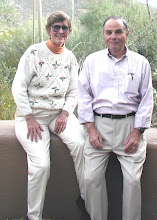
Huguette Pettis owned Sunnyview School. Even though Sunnyview was advertised as an “American School.” Honey (she despaired of any non-French person ever pronouncing “Huguette” correctly) imparted a distinctly European atmosphere. She was French, raised in Algeria, and educated in the European style, the only style suitable for educating young people in her opinion.
I possessed none of those advantages. Although the school year started out well enough, it soon became apparent that she did not think much of my American ways or style of teaching. We had saved money during our profitable years on Guam and had planned originally to not work for the two years we spent in Spain. Given this financial situation, I made plans to work as a self-employed full-time free-lance writer for a year. Honey quite liked Joanne since her style of teaching was more “French,” and so our economic plan involved her continued employment. I recommend this situation to any young married man. This is a great plan for a free-lance writer.
It was in the spring of 1975 and I wanted to go out with a last hurrah, so I volunteered to supervise the end-of-the-year program for the kindergarten through eighth-grade. I was interested in total student involvement and in having interested and talented children working with each other no matter what their grade or who their teacher. Very unFrench. Kindergarten and first grade were the exceptions. Their teachers felt that their kids weren’t quite ready for a free-wheeling activity like this and would rather participate as a group. I wasn’t sure I was quite ready for this activity either. But I was obligated, and so away we went
.
First we had a brainstorming session. There were lots of interesting students and I mixed and matched them so that at least three grade levels were involved in every group, more often four grade levels. The groups were charged with generating ideas no matter how silly, impossible or expensive. The only thing worse than a bad idea, I told them, is no idea at all.
Ideas emerged from movies to monsters to kung fu. One girl didn’t care what we did so long as she got to do a ballet number. The one idea that struck most everyone’s fancy was the story line from Around the World in Eighty Days.
So now we needed to adapt Jules Verne’s novel to our needs and we formed a writing group. I really didn’t want a script with blocking and memorized lines because I thought they would interfere with these kids’ strongest points, imagination, spontaneity, creativity, enthusiasm. In other words, I didn’t want to do a lot of directing.
The group roughed out a story and we selected the countries we would visit for a variety of reasons. We chose Russia so our ballerina could dance. We chose the United States so the kindergarteners and first graders could stage an Indian raid. We chose Spain because we had a Spanish dancing class, England because that’s where Verne started and ended his story, and Africa for no reason at all.
Because we had no theater, we built our sets in different classrooms. That way they could be put up permanently and the audience could go from set to set under the direction of student “tour guides.” About twenty students threw themselves into set building projects. They built Africa and Russia on the second floor, the USA, Spain and England on the first floor, and a portable Indian teepee for the playground outside. They acquired their own materials and designed and built their own sets. Good thing. I’m terrible at designing and building sets. It turned out they weren’t very good either and sometimes the sets wouldn’t nail together or tumbled down as fast as they put them up. But they kept at it and found solutions. Where they found them, I don’t know, because they didn’t ask me.
The acting group had to first get used to improvising. We did some of the beginning drills, pretending we were flowers opening, apples falling from trees, bacon frying in a pan. I gave a few hints on movement and voice projection, but not all that much. Then we started on our play, the story for which had by now been written.
We began daily rehearsals. Everyone involved acted several different parts each day for two weeks before I cast anyone. There was so much interest in the show among the parents that we decided on four different performances. I cast the show in four different ways so everyone got to do four different parts. In one show Passapartout, the valet, was played by three small second graders who had worked out a comedy routine. In another the valet was played by a French boy who had enrolled the previous October speaking only French and Spanish. By June his English was acceptable but heavily accented. He said all of his lines in French. I think I was the only one who didn’t understand what he was saying.
The kindergarteners and first graders were making their costumes and weapons and practicing a dance. They were going to tie their captive to a pole and dance around him. The only difficulty we had with them was persuading them to release their captive so he could be in the next scene.
An eighth grade boy assumed the role of stage manager and took it upon himself to be sure that the set was ready and the actors in place on time. Some of our props had to be hand made and weren’t always successful. We had a hand lens for the detective, but it always bent in the middle so we never used it.
The students interested in music had dwindled to a precious few. Our orchestra consisted of a clarinetist, a guitarist and a bongo player who massaged Moroccan drums, tin cans and other bangables. They furnished most of the music to start the scenes, although the dance music was provided by record player or tape recorder.
As opening neared, the remaining students were pressed into service as furniture movers, tour guides and “expediters” whose job it was to get the parents away from the punch bowl and into the correct room so they could see the play.
Here is as much script as we ever had.
Scene One—London, a pub. Orchestra: Around the World in Eighty Days. A newspaper reader recounts a story of the robbery of the Bank of England to other patrons. This leads into a story about whether it is possible to circumnavigate the world in 80 days. There is a heated argument. Phileas Phogg bets 20,000 pounds he can do it. He and Passapartout, his valet, leave with a bag of money, their traveling expenses.
Scene Two—Spain, a café. Guitarist: Pasodoble. Phogg and Passapartout are on stage admiring the dances from the Spanish dancing class and eating oranges, the peels of which they put into a bag which is an exact duplicate of their money bag. Enter detective, Hemlock Bones, who explains that Phogg and Passapartout were seen leaving England with a bag of money which he thinks is the loot from the Bank of England robbery. Bones steals the wrong bag and exits vowing to dump the contents on the bank manager’s desk.
Scene 3:--Africa, outdoor bazaar. Drummer: solo. Bones enters muttering something about soreheaded bank managers and is about to make his arrest when he is fed a native delicacy and collapses. A witchdoctor performs an emergency laporotomy in his clinic and removes all manner of items from the detective’s abdominal cavity including cans, bottles, lengths of hose. The doctor’s clinic was made of branches and leaves in the center of the room. The front of the clinic was covered with a sheer and a light set up at the rear of the room so we could project this high drama in silhouette form.
Scene 4:--Russia, indoors. Bones enters clutching his abdomen and is about to arrest Phogg and Passapartout when a smuggler asks him to hold a mysterious package. Police then drag the protesting detective off to jail. Afterwards the ballet was performed as well as a Russian folk dance created by four girls in the Spanish dancing class. One of the girls had a hissy fit and dropped out, so the dance for four was done by three. One of the remaining three girls could actually do kazotskies, which amazed us all. That helped make up for the missing dancer. Sometimes one of the dancers also acted in the same scene. Then they would improvise a way to change from policeman, or smuggler to dancer.
Scene 5:--USA, outdoors. Clarinet: Do You Know the Way to San Jose. Actors enter on a train. Just as Bones is about to make his arrest, the first graders and kindergarteners, who have been hiding in rooms all around the set, stage a raid and kidnap him. To attack they had to work their way through the legs of the parents who were standing between them and the USA set. The train collapsed before it’s final performance, so the actors formed a conga line and shook cans of gravel for sound effect.
Scene 6:--London, pub. Orchestra: Around the World in Eighty Days. Phogg wins the bet by arriving just as the clock strikes 12. (Sometimes we had someone off-stage strike the chimes. Once we had someone dressed in a clock suit hit himself in the head with a mallet. It was up to the clock in each performance.) Bones enters and is about to finally make his triumphant arrest when the newspaper reader announces that the thief was caught. It was the bank manager. Bones faints and all of the Indians and other participants enter over his (or her) recumbent form. All bow and exit.
I had forgotten all about this play until I reviewed my Spain notes from over thirty years ago. I really liked this show. For one thing, I didn’t have to do much work. Whenever some kid asked me if something was good, I’d reply, “Let’s try it and see.” Also, I never knew what was going to happen. Each performance was brand new.
As I think about it, this was a good unit. I’m sure the kids learned something. I had no lesson plan with goals, objectives, evaluative criteria, none of that. But I’m sure they learned something. I just don’t know what.
The parents loved the show. Some of them saw all four performances. There were lots of compliments on how creative the children were. Honey Pettis was pleased. How French.
Copyright Ken Harris 2009
Saturday, March 7, 2009


Monday, March 2, 2009
A Very Short Story
Susan Lemke told us once about trying to lead her first grade student Julius to the conclusion that 1 + 2 = 3. Somehow drawings, fingers, hash marks and arrangements of painted sticks weren't quite enough.
“Now, Julius, 1 + 1 is 2, right?”
“Yes.”
“So 1 + 2 is 3, right?”
“Doesn't have to be.”
If he had just said “no” that would have been one thing. But to suppose that 1 + 2 is sometimes 3 and sometimes not 3, what is a teacher going to do with that?
Sometimes when the weather permitted, some staff and students would play volley ball. When Julius played, he was fierce about defending his territory. If a ball came his way, he would handle it thank you and would the adults please butt out.
Julius commanded a lot of respect around the school yard because he willed it to be that way. An object lesson for us all.
Copyright Ken Harris 2009
“Now, Julius, 1 + 1 is 2, right?”
“Yes.”
“So 1 + 2 is 3, right?”
“Doesn't have to be.”
If he had just said “no” that would have been one thing. But to suppose that 1 + 2 is sometimes 3 and sometimes not 3, what is a teacher going to do with that?
Sometimes when the weather permitted, some staff and students would play volley ball. When Julius played, he was fierce about defending his territory. If a ball came his way, he would handle it thank you and would the adults please butt out.
Julius commanded a lot of respect around the school yard because he willed it to be that way. An object lesson for us all.
Copyright Ken Harris 2009
Friday, February 20, 2009
David Taff
David Taff
© Ken Harris 2009
Although I taught sixth and seventh grades at Sunnyview School, a first grader, David Taff, a seven-year-old with all the confidence of a winning politician, used to drop by my room in his free time to have a chat. We talked of many things and his vocabulary was so sophisticated and his observations so acute that I sometimes forgot that I was conversing with a seven-year-old boy.
David's visits dropped off a bit in the spring because a marble craze hit Sunnyview. Everyone played. Boys, and some girls, walked around with their bags of marbles dangling from their belts. At recess about half the students all you could see of them was their rear ends as they knelt in the dirt and flicked glass balls at other people's glass balls. Every now and then someone would show up with a ball bearing for a shooter, a “steelie,” and great would be the outcry of indignation.
But one lunch period David showed up at my desk without his bag of marbles. I asked him, “David, have you lost your marbles?” (Pretty clever joke, huh?)
David replied, “No, but I thought the interest in marbles would soon peak, maybe next week, so I thought I'd sell out while the market is up.”
I thought David was an American until his sister showed up for kindergarten. She didn't speak English at all. She only spoke Swedish and Spanish, the two languages in her home.
I imagine we all work for David now. We just don't know it.
© Ken Harris 2009
Although I taught sixth and seventh grades at Sunnyview School, a first grader, David Taff, a seven-year-old with all the confidence of a winning politician, used to drop by my room in his free time to have a chat. We talked of many things and his vocabulary was so sophisticated and his observations so acute that I sometimes forgot that I was conversing with a seven-year-old boy.
David's visits dropped off a bit in the spring because a marble craze hit Sunnyview. Everyone played. Boys, and some girls, walked around with their bags of marbles dangling from their belts. At recess about half the students all you could see of them was their rear ends as they knelt in the dirt and flicked glass balls at other people's glass balls. Every now and then someone would show up with a ball bearing for a shooter, a “steelie,” and great would be the outcry of indignation.
But one lunch period David showed up at my desk without his bag of marbles. I asked him, “David, have you lost your marbles?” (Pretty clever joke, huh?)
David replied, “No, but I thought the interest in marbles would soon peak, maybe next week, so I thought I'd sell out while the market is up.”
I thought David was an American until his sister showed up for kindergarten. She didn't speak English at all. She only spoke Swedish and Spanish, the two languages in her home.
I imagine we all work for David now. We just don't know it.
Thursday, February 12, 2009
Thanos Sioris
Thanos Sioris
©Ken Harris, 2008
Sunnyview School had many creative, intelligent students. Unfortunately, they seldom displayed both qualities at the same time. Thanos Sioris was one of the most interesting boys in my sixth grade class. Of moderate height for a twelve-year-old, he was neither the tallest nor the shortest boyi n the class. His complexion was not notably pale, even though his mother was Finnish. Neither was his complexion a Mediterranean walnut though his father was Greek. He was a little on the rotund side and not at all athletically gifted. He possessed none of the attributes that would make him a middle school idol.
Normally such a child would be scorned and teased by his classmates and older students. But such was not the case with Thanos, for the other students recognized in him qualities that made him an original. For one thing, he was always in the adult ego state. You may recall Dr. Eric Bern’s book, I’m O.K., You’re O.K., in which he identified three ego states, Parent, Adult and Child. These ego states were beautifully personified in the original Star Trek. Captain Kirk was almost always the Parent, Mr. Spock was the Adult, and Dr. McCoy was the Child. My sixth grade at Sunnyview School was blessed with a short, slightly rotund Mr. Spock.
Thanos engaged life as a series of problems to be met and solved. So, when some other students asked him to make some itching powder, Thanos regarded the problem as a scientific conundrum. “All right, how do you make itching powder?” Thanos didn’t get into as much trouble as he could have because the staff knew that for him it was an intellectual problem. It probably didn’t even occur to him to ask what the others were going to do with the itching powder. That wasn’t part of the problem.
Once he came up to me with a chemistry problem. “Mr. Harris, I know that you need saltpeter, charcoal and sulfur to make gunpowder. But I can’t find out how much or what the right proportions are. Do you know?”
“No, Thanos, I don’t know,” I replied. “But even if I did, I wouldn’t tell you because you’d blow us all up with your experiments.” He didn’t take my response personally but wandered off instead to seek an answer from another source.
Thanos also had focus. He absolutely knew he was going to be a doctor when he grew up and spent long hours preparing himself. He worked in an apothecary’s shop after school. He had a better, larger, more fully equipped first aid kit at home than we did at school.
That first winter in Spain, in cold, drizzly, wind blown Spain, I developed a head cold with all the uncomfortable symptoms possible. I didn’t miss a one. One day at the height of my misery Thanos handed me the names of two over-the-counter remedies that would address my symptoms., one for my sinuses and runny nose, and the other for my coughing.
He failed to understand the humor when anonymous students posted an ad for “Dr. Sioris” on the school bulletin board that even gave his office hours. If it came down to it, which it never did, I would rather have gone to “Dr. Sioris” than a Spanish doctor. Thanos had a good command of spoken English and a comprehensive knowledge of readily available medicines.
One day in the spring of 1975 a seventh grade boy, Steve Ogden, did something to render himself unconscious on the playground. Even the people with him were unsure of what had happened and, therefore, had no useful opinions about what he might have injured or how badly.
Joanne had him moved into a lounge, out of public view, and laid upon a cushioned surface normally used as a settee. And there he lay, inert but breathing, Joanne observing closely. Thanos entered the room and observed dispassionately, “Mrs. Harris, if his neck is injured he would be better off on a hard surface, the floor, for instance, than the soft one.”
Joanne realized that Thanos was absolutely correct, but replied with perhaps a little more vehemence than necessary, “Thanos, we’re not moving him until we know how badly he’s injured.”
Thanos then launched into an apparently inexhaustible supply of dreadful, dismal and disastrous tales about injuries to the cranium and cervical spine. Just as he was really warming to his subject, the object of concern groaned and then murmured, “Oh, my head.”
At that point the bell rang and Dr. Sioris returned to his regular duties in the sixth grade classroom. Nowadays when Dr. Sioris returns to his regular duties, they are in the Department of Cardiothoracic Surgery, Helsinki University Central Hospital, Finland. But I knew him when he treated common colds and offered friendly advice and cautionary tales to concerned teachers.
©Ken Harris, 2008
Sunnyview School had many creative, intelligent students. Unfortunately, they seldom displayed both qualities at the same time. Thanos Sioris was one of the most interesting boys in my sixth grade class. Of moderate height for a twelve-year-old, he was neither the tallest nor the shortest boyi n the class. His complexion was not notably pale, even though his mother was Finnish. Neither was his complexion a Mediterranean walnut though his father was Greek. He was a little on the rotund side and not at all athletically gifted. He possessed none of the attributes that would make him a middle school idol.
Normally such a child would be scorned and teased by his classmates and older students. But such was not the case with Thanos, for the other students recognized in him qualities that made him an original. For one thing, he was always in the adult ego state. You may recall Dr. Eric Bern’s book, I’m O.K., You’re O.K., in which he identified three ego states, Parent, Adult and Child. These ego states were beautifully personified in the original Star Trek. Captain Kirk was almost always the Parent, Mr. Spock was the Adult, and Dr. McCoy was the Child. My sixth grade at Sunnyview School was blessed with a short, slightly rotund Mr. Spock.
Thanos engaged life as a series of problems to be met and solved. So, when some other students asked him to make some itching powder, Thanos regarded the problem as a scientific conundrum. “All right, how do you make itching powder?” Thanos didn’t get into as much trouble as he could have because the staff knew that for him it was an intellectual problem. It probably didn’t even occur to him to ask what the others were going to do with the itching powder. That wasn’t part of the problem.
Once he came up to me with a chemistry problem. “Mr. Harris, I know that you need saltpeter, charcoal and sulfur to make gunpowder. But I can’t find out how much or what the right proportions are. Do you know?”
“No, Thanos, I don’t know,” I replied. “But even if I did, I wouldn’t tell you because you’d blow us all up with your experiments.” He didn’t take my response personally but wandered off instead to seek an answer from another source.
Thanos also had focus. He absolutely knew he was going to be a doctor when he grew up and spent long hours preparing himself. He worked in an apothecary’s shop after school. He had a better, larger, more fully equipped first aid kit at home than we did at school.
That first winter in Spain, in cold, drizzly, wind blown Spain, I developed a head cold with all the uncomfortable symptoms possible. I didn’t miss a one. One day at the height of my misery Thanos handed me the names of two over-the-counter remedies that would address my symptoms., one for my sinuses and runny nose, and the other for my coughing.
He failed to understand the humor when anonymous students posted an ad for “Dr. Sioris” on the school bulletin board that even gave his office hours. If it came down to it, which it never did, I would rather have gone to “Dr. Sioris” than a Spanish doctor. Thanos had a good command of spoken English and a comprehensive knowledge of readily available medicines.
One day in the spring of 1975 a seventh grade boy, Steve Ogden, did something to render himself unconscious on the playground. Even the people with him were unsure of what had happened and, therefore, had no useful opinions about what he might have injured or how badly.
Joanne had him moved into a lounge, out of public view, and laid upon a cushioned surface normally used as a settee. And there he lay, inert but breathing, Joanne observing closely. Thanos entered the room and observed dispassionately, “Mrs. Harris, if his neck is injured he would be better off on a hard surface, the floor, for instance, than the soft one.”
Joanne realized that Thanos was absolutely correct, but replied with perhaps a little more vehemence than necessary, “Thanos, we’re not moving him until we know how badly he’s injured.”
Thanos then launched into an apparently inexhaustible supply of dreadful, dismal and disastrous tales about injuries to the cranium and cervical spine. Just as he was really warming to his subject, the object of concern groaned and then murmured, “Oh, my head.”
At that point the bell rang and Dr. Sioris returned to his regular duties in the sixth grade classroom. Nowadays when Dr. Sioris returns to his regular duties, they are in the Department of Cardiothoracic Surgery, Helsinki University Central Hospital, Finland. But I knew him when he treated common colds and offered friendly advice and cautionary tales to concerned teachers.
Subscribe to:
Posts (Atom)